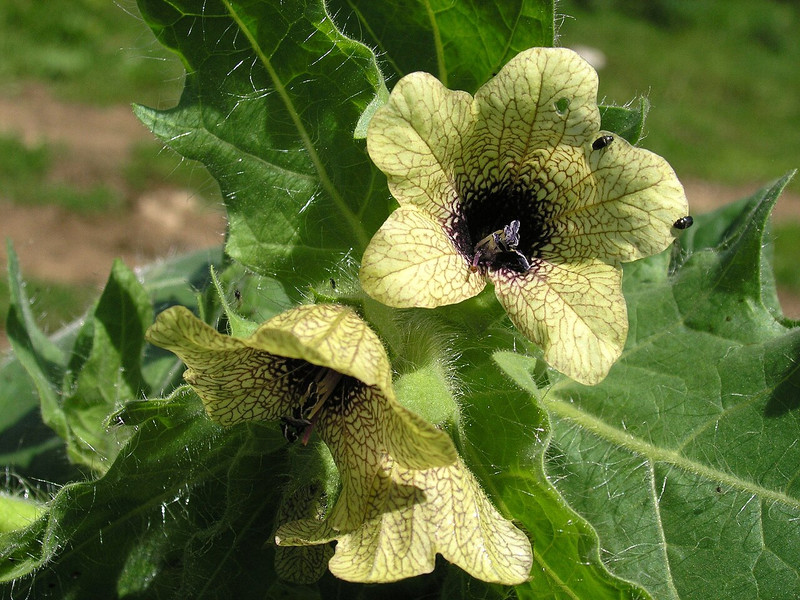
Highly Poisonous Invasive Plant Identified Along Lake Diefenbaker
Visitors to Lake Diefenbaker are being reminded to use caution after a highly poisonous invasive plant has been identified along the shoreline and surrounding grasslands.
The RM of Victory issued a public safety notice after black henbane (Hyoscyamus niger) was discovered growing near Lake Diefenbaker. The plant is classified as a noxious weed in Saskatchewan and can pose a serious risk to people, pets, livestock, and wildlife.
What is black henbane?
Black henbane is an invasive annual or biennial plant that can grow in a variety of soil conditions. It typically flowers from June through September, with peak flowering occurring in July.
Learn more about Black Henbane and how to identify it.
The plant can grow up to one metre tall and is identifiable by:
- Thick stems covered in fine hairs
- Large greyish-green leaves
- Pale yellow, funnel-shaped flowers with dark purple centres
- Urn-shaped seed pods
All parts of the plant are considered toxic, including the:
- Leaves
- Flowers
- Stems
- Seeds
- Roots
Black henbane is also known by names including Hogbane, Insane Root, and Stinking Nightshade.
Health risks
Black henbane contains toxic compounds that can affect both humans and animals if ingested.
Possible signs of poisoning in people include:
- Dilated pupils
- Blurred vision
- Rapid heartbeat
- Agitation or hallucinations
- Flushed or dry skin
- Dry mouth and difficulty swallowing
More serious cases can result in seizures, coma, or death.
Animals exposed to the plant may experience:
- Dilated pupils
- Excessive thirst
- Rapid heartbeat
- Weakness
- Tremors
- Difficulty breathing
Safety precautions around Lake Diefenbaker
The RM of Victory recommends the following precautions:
- Do not touch black henbane with bare hands
- Wear gloves, eye protection, and long clothing if handling is necessary
- Teach children not to touch or eat unknown plants
- Keep pets and livestock away from affected areas
- Avoid inhaling dust from dried plants or seeds
- Do not burn the plant
- Thoroughly clean clothing and tools after contact
Simply being outdoors near the plant does not pose the same risk as touching or ingesting it, but visitors should avoid handling any unknown plants.
Reporting black henbane sightings
Residents and visitors who find suspected black henbane patches around Lake Diefenbaker or within the RM of Victory can report sightings by contacting:
Phone: 306-859-2270
Email: [email protected]
Anyone who believes a person or animal has consumed black henbane should seek medical attention immediately.